
What is Nano Banana 2?
Nano Banana 2 is Google’s latest fast image generation model, introduced as Gemini 3.1 Flash Image. In Google’s official documentation, Nano Banana 2 is positioned as the Flash-tier image model that inherits many of the “Pro” capabilities (like rich text rendering and nuanced instruction following), while staying optimized for rapid turnaround. If you want production-ready visuals without a long wait, Nano Banana 2 is intended to sit in the sweet spot between speed and quality.
The official model card describes Gemini 3.1 Flash Image as a multimodal model that takes text, images, audio, and video as input and can generate images and text as output. It supports a large context window (up to 1,000,000 tokens) and high output capacity (up to 64K tokens for text and 4K tokens for image output). These technical details matter because they explain why Nano Banana 2 can handle long prompts, multi-step instructions, and complex visual layouts in a single run.
Grounded generation and real‑world knowledge
One of the core differentiators of Nano Banana 2 is that it is designed for grounded image generation. Google notes that Gemini 3.1 Flash Image draws on the Gemini model’s real‑world knowledge and can use real‑time information and images from web search. That grounding focus makes the model particularly useful for infographics, data visualizations, and educational diagrams where factual accuracy and recognizable references matter.
In practice, that means you can ask for diagrams that must align with real‑world structure (such as geographic maps or scientific processes) and get outputs that are closer to those real references. For SEO traffic, this “grounded” capability is often what users search for when they need visuals that are more than just aesthetic.
Text rendering and localization
Google explicitly highlights Nano Banana 2’s ability to generate precise text and translate it into different languages. This is important for real‑world marketing assets, posters, packaging mockups, and localized social content. Unlike many older image models that produce garbled typography, Nano Banana 2 is tuned for cleaner, more legible text in‑image.
That said, the official model card also notes limitations: very small text can be difficult to read, and complex layouts can introduce spelling or spacing errors. For best results, keep typography large, specify font styles clearly, and reduce the amount of tiny copy in a single generation.
Instruction following and subject consistency
Nano Banana 2 is designed to follow complex prompts more reliably than earlier Flash‑tier image models. The intended usage section in the official model card emphasizes high‑precision design tasks, fast iteration cycles, and multi‑step prompt execution. This makes the model a strong choice for workflows where you need to maintain consistent characters or objects across multiple scenes, or where you need to preserve the structure of a layout.
Google also highlights subject consistency across multiple characters and objects. In an SEO context, many users search for “consistent characters” or “same subject across images.” Nano Banana 2 is explicitly positioned to address that use case. While it is not perfect, it is a meaningful upgrade over prior Flash image models.
Aspect ratios and resolution support
Google states that Nano Banana 2 supports multiple aspect ratios and resolutions from 512px up to 4K. This makes it suitable for everything from quick social graphics to higher‑resolution marketing or presentation assets. If your workflow spans multiple platforms (square, portrait, wide), Nano Banana 2’s flexibility in output size can reduce the need for manual resizing.
Official example prompts
The examples below come from Google DeepMind’s Gemini 3.1 Flash Image page. Each image is paired with a short excerpt of the official prompt.

Official prompt excerpt
Create a 3D isometric cutaway diagram of the Earth. Show labeled layers: crust, mantle, outer core, inner core.

Official prompt excerpt
Triptych infographic comparing three types of clouds: Cumulus, Stratus, and Cirrus. Each panel shows the cloud type in a dramatic sky.

Official prompt excerpt
High-quality flat lay photography creating a DIY infographic that explains how the water cycle works. Use craft materials like paper and cotton.
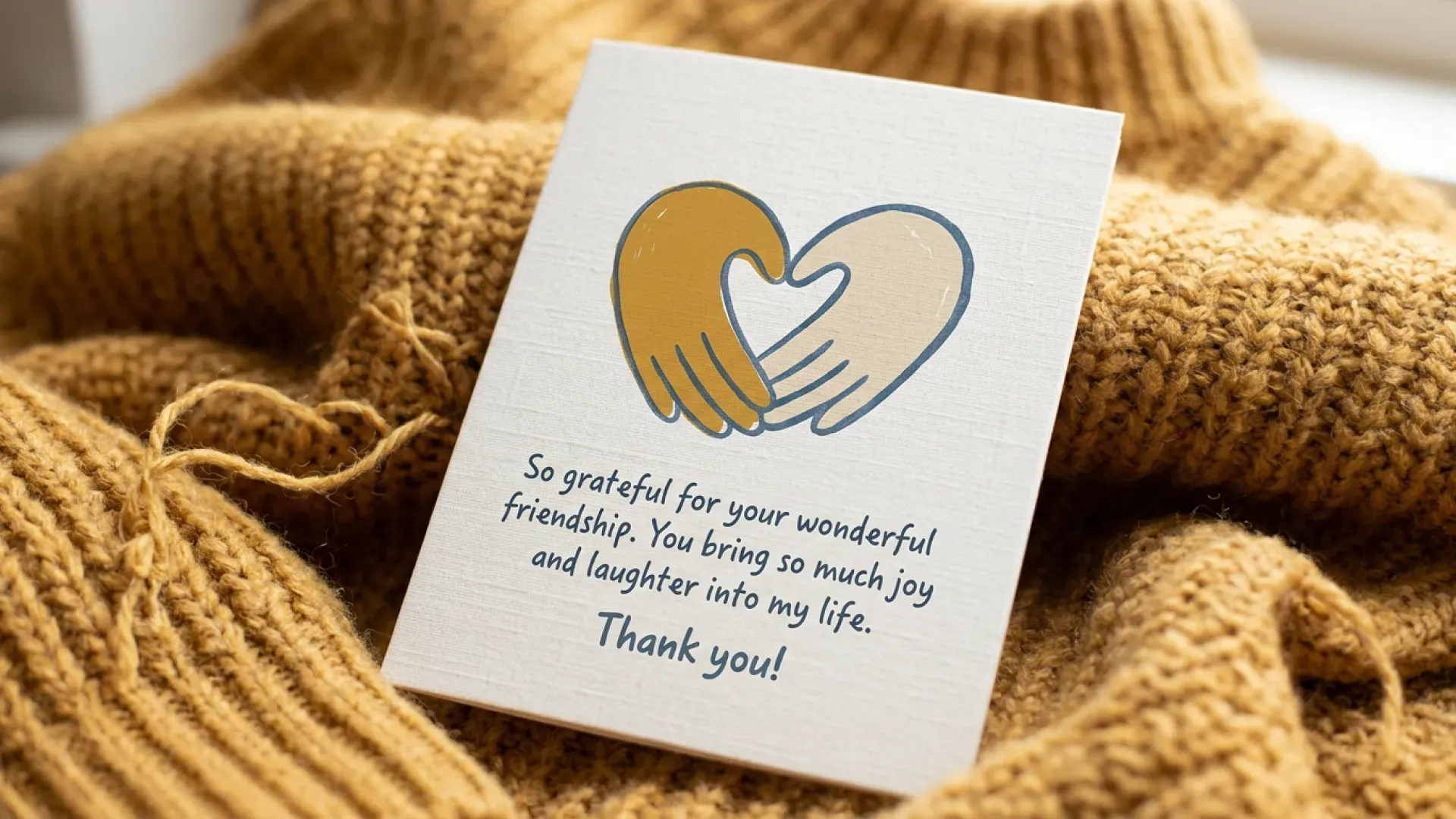
Official prompt excerpt
This warm friendship card is artfully placed on a soft, textured fabric surface, perhaps a chunky knit sweater, suggesting comfort and closeness. The design is heartfelt and approachable, with a cozy color palette of warm mustard yellow, soft denim blue, and creamy beige. The central graphic is a simple, hand-drawn illustration of two intertwining hands or a stylized heart, rendered with a slightly imperfect, charming quality. The typography for “So grateful for your wonderful friendship. You bring so much joy and laughter into my life” is in a friendly, flowing script font that feels personal and sincere. The “Thank you!” is in a slightly bolder, complementary sans-serif font. The card stock has a subtle, tactile linen texture, enhancing the feeling of authenticity and warmth. The overall impression is one of genuine appreciation and the comforting bond of friendship.
Parameter chart (official specs)
| Parameter | Value |
|---|---|
| Official model name | Gemini 3.1 Flash Image (Nano Banana 2) |
| Input modalities | Text, image, audio, video |
| Output modalities | Image, text |
| Context window | Up to 1,000,000 tokens |
| Output limits | Text: up to 64K tokens; Image: up to 4K tokens |
| Knowledge cutoff | January 2025 (official model card) |
| Resolution range | 512px to 4K |
| Aspect ratios | Multiple (officially supported) |
How Nano Banana 2 compares to Nano Banana and Nano Banana Pro
Google’s model card for Gemini 3.1 Flash Image explicitly references Nano Banana (Gemini 2.5 Flash Image) and Nano Banana Pro (Gemini 3 Pro Image). In short: Nano Banana 2 is the Flash‑tier model in the Gemini 3.1 generation, while Nano Banana Pro is the higher‑end Pro image model. Nano Banana (without the “2”) refers to the earlier Gemini 2.5 Flash Image model.
| Model | Official model | Positioning |
|---|---|---|
| Nano Banana | Gemini 2.5 Flash Image | Earlier Flash image model focused on speed and lightweight generation. |
| Nano Banana 2 | Gemini 3.1 Flash Image | Latest Flash‑tier image model with stronger instruction following and text rendering. |
| Nano Banana Pro | Gemini 3 Pro Image | Pro‑tier image model aimed at maximum quality and control. |
Known limitations and practical guidance
The official model card highlights several limitations. Small text may appear distorted or misspelled. Character or object consistency can still drift in complex scenes. The model can struggle with copying or pasting from input images, and intricate spatial reasoning may not be perfect. There are also common generative AI issues such as occasional artifacts and misalignment with user intent.
For best results, keep prompts structured, describe layout explicitly, and avoid overloading a single generation with too many tiny text elements. If you need multi‑panel sequences or a series of matching images, consider using stable descriptors for each subject and keep the camera angle consistent across prompts.
FAQ
Is Nano Banana 2 the same as Gemini 3.1 Flash Image?
Yes. Google’s official documentation presents Nano Banana 2 as Gemini 3.1 Flash Image.
Does Nano Banana 2 support grounded generation?
Google states the model can use real‑time information and images from web search to improve grounded outputs.
What resolution can Nano Banana 2 generate?
Google reports support for multiple aspect ratios and resolutions from 512px up to 4K.
Is it good for text‑heavy visuals?
Yes, Nano Banana 2 is optimized for clearer text rendering compared to earlier Flash models. However, extremely small text can still be unreliable, so larger type is recommended.